

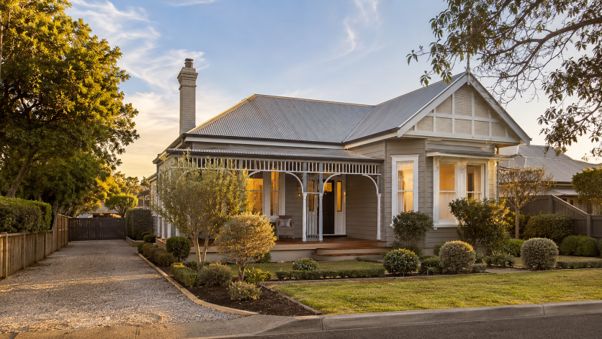
There has been plenty of uncertainty in the property market this year.
Interest rates, higher petrol prices, cost-of-living pressures and changes to government policy have all influenced buyer confidence. Yet despite those challenges, the Geelong property market has remained relatively resilient.
So what’s keeping it going?
In my view, one of the biggest factors is relative affordability.
Geelong isn’t the bargain it once was. Property prices have increased significantly over the past decade, particularly following the strong growth experienced during COVID.
But when buyers compare what their money can buy in Geelong with many parts of Melbourne, the value proposition can still be compelling.
And that’s continuing to bring buyers to the region.
Geelong has already been through a significant correction
It’s important to put the current market into perspective.
Geelong experienced exceptional price growth during the COVID period as buyers looked beyond Melbourne for more space, lifestyle and affordability.
That growth wasn’t sustainable indefinitely, so some level of correction was always likely.
According to recent PropTrack data, Geelong’s median home value in June 2026 was only around 1.1 per cent lower than it had been 12 months earlier.
The market had reached a peak around January 2026, but the decline from that peak has been relatively modest.
That doesn’t mean every property has held its value.
It means the broader Geelong market has shown a degree of resilience despite a much more challenging environment.
And I think there are some good reasons for that.
Affordability is still attracting buyers
When people talk about Geelong’s affordability, it’s important to put it into context.
Geelong isn’t necessarily “cheap”.
But compared with many Melbourne suburbs, buyers can still access a different level of property for their budget.
That might mean a larger block, an established family home, better access to lifestyle amenities or simply more space.
For someone selling in Melbourne and relocating to Geelong, that difference can be significant.
And we’re not just talking about investors.
Owner-occupiers, first-home buyers, families and people relocating from Melbourne are all part of the buyer pool.
For many of these buyers, the decision isn’t simply about chasing capital growth.
It’s about asking:
Where can I afford to live the way I actually want to live?
Lifestyle is part of Geelong’s affordability story
I think it’s easy to focus solely on the numbers when talking about property.
But Geelong’s appeal isn’t just about what a house costs.
You have the waterfront, established suburbs, schools, healthcare, cafes and restaurants, the Bellarine Peninsula and the Surf Coast all within relatively easy reach.
For many Melbourne buyers, that’s a significant lifestyle proposition.
You can potentially live closer to the coast, have more space and still maintain access to Melbourne when you need it.
For buyers who work remotely or have adopted hybrid working arrangements, the equation has changed even further.
A commute that once made Geelong feel too far away can look quite different if you’re travelling into Melbourne two days a week rather than five.
That doesn’t mean Geelong will suit everyone.
But it does mean the buyer pool has become broader.
The market isn’t moving uniformly
This is where buyers need to be careful.
When we talk about Geelong being resilient, we’re talking about the broader market.
That doesn’t mean every suburb, property type or price bracket is performing in the same way.
We’ve seen stronger demand in some of the more affordable parts of Geelong, while some higher-priced and coastal areas have experienced more noticeable softening.
Even within the same suburb, there can be significant differences.
Take Belmont, for example.
There are pockets that provide relatively accessible entry points for buyers, while properties closer to the Barwon River can command a very different price.
The suburb name alone doesn’t tell you what a property is worth.
The individual location matters.
So does the land, the condition of the home, the street, the surrounding properties and what comparable homes have recently sold for.
Why Melbourne buyers are still looking towards Geelong
One of the most interesting parts of the current market is the continued movement of buyers from Melbourne.
For some, the motivation is straightforward:
Their budget simply stretches further.
A buyer who might struggle to find the right family home within their preferred Melbourne suburb may have considerably more choice in Geelong.
But affordability isn’t necessarily the only reason.
Some buyers are choosing Geelong because they want a different lifestyle.
They want access to the coast.
They want more space.
They want established communities.
They want to be closer to the Bellarine or Surf Coast.
And increasingly, they want to balance lifestyle with the ability to remain connected to Melbourne.
That’s a very different motivation from simply trying to “get into the market”.
What does this mean if you’re buying in Geelong?
This is where I think buyers need to resist the temptation to wait for a perfect market.
Trying to predict whether prices will be higher or lower six or twelve months from now is incredibly difficult.
Instead, I’d focus on whether the property you’re buying makes sense at today’s price.
I’d be asking:
What have comparable properties actually sold for?
The asking price is only a starting point.
Recent comparable sales can tell you much more about where the market is actually trading.
Is the property priced realistically?
In a more selective market, well-priced properties can still attract strong competition.
Overpriced properties are a different story.
What is the location like?
Being in the right suburb isn’t enough.
The particular street, position within the suburb and proximity to amenities can have a meaningful impact on desirability and resale.
Who will want this property in the future?
Even if you’re buying a home for yourself, it’s worth considering future buyer appeal.
A property with broad appeal can give you more options when the time eventually comes to sell.
Does it suit your actual circumstances?
A first-home buyer, investor, downsizer and growing family can all have completely different definitions of a “good property”.
There is no one-size-fits-all answer.
Geelong isn’t cheap — but value is relative
This is probably the biggest takeaway I’d give buyers looking at the Geelong property market in 2026.
I wouldn’t describe Geelong as an “affordable market” without qualification.
Prices have risen substantially, and some suburbs are now well beyond the budgets of many first-home buyers.
But compared with many Melbourne locations, Geelong can still offer a compelling combination of price, space and lifestyle.
And that’s a big reason why demand hasn’t simply disappeared despite the tougher economic conditions.
The market may be softer than it was during the boom.
But softer doesn’t necessarily mean opportunity has disappeared.
In some cases, a more balanced market can actually give buyers more time to do their homework, negotiate carefully and be selective about what they purchase.
My view on the Geelong market
I don’t think buyers need to be overly optimistic about Geelong.
But I also don’t think the headlines about a softer property market should automatically make you walk away.
The current market is nuanced.
Some suburbs are performing better than others. Some properties are attracting strong competition. Others are sitting on the market and providing buyers with more negotiating room.
For me, that’s where the opportunity lies.
Not in trying to predict the next boom, but in identifying the properties that represent genuine value.
If you’re buying in Geelong, the question I’d encourage you to ask isn’t simply:
“Will Geelong prices go up?”
Instead, ask:
“Is this the right property, in the right location, at the right price for me?”
That’s a much more useful question — and one you can actually make an informed decision about.
Thinking about buying in Geelong?
Whether you’re a first-home buyer, relocating from Melbourne, upsizing, downsizing or investing, understanding the local market can make a significant difference to the outcome.
If you’re unsure which Geelong or surrounding suburb makes sense for your budget and goals, I’d be happy to help you work through the options and identify where the opportunities may be.
Market information referenced in this article is based on 2026 market data and published commentary. Property values and market conditions can change, and individual properties should always be assessed on their own merits.