
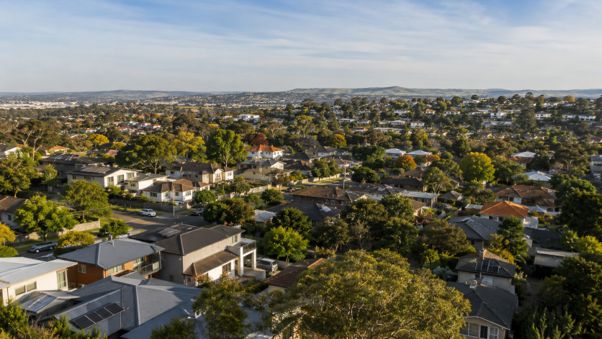
If you’ve been watching the Geelong property market lately, you may be getting mixed messages.
On one hand, some of Geelong’s more affordable suburbs have recorded impressive price growth over the past year. On the other, there are clear signs that the market has become more cautious, with many suburbs recording softer results over the most recent quarter.
So, what is actually happening?
The short answer is that Geelong is not one property market.
Different suburbs, price points and types of property are behaving very differently — and for buyers, understanding that difference is becoming increasingly important.
Affordable Geelong suburbs are attracting strong demand
Recent PropTrack data shows just how significant the growth has been in some of Geelong’s more affordable areas.
Norlane and Corio recorded annual house-value growth of more than 20% in the year to June 2026, with the median house value in Corio reaching $594,610 and Norlane $549,244.
Other more affordable suburbs have also recorded double-digit annual growth, including:
- Whittington
- St Albans Park
- Newcomb
- Bell Post Hill
- Bell Park
- North Geelong
These suburbs sit below Geelong’s broader median price point, which helps explain some of the demand.
For buyers who are trying to get into the market without stretching into the higher price brackets, affordability matters.
But I think there is another important point here.
Strong growth doesn’t automatically mean a suburb is still good value.
Once a suburb has experienced significant growth, buyers need to look more closely at what they are actually getting for their money.
The annual numbers don’t tell the whole story
This is where the current Geelong market becomes interesting.
While 35 Geelong suburbs recorded higher median house values than 12 months earlier, PropTrack’s June-quarter figures showed that 32 suburbs experienced a decline over the three months. Only nine suburbs recorded quarterly growth.
That tells us something important.
The market has not simply stopped growing, but momentum is becoming much more selective.
A suburb can have strong annual growth and still be experiencing softer conditions right now.
For buyers, I wouldn’t look at a single annual growth figure and assume that tells you where the market is heading next.
I’d want to know:
- What has actually sold recently?
- What are comparable properties selling for?
- How long are properties taking to sell?
- How much competition is there?
- Are buyers negotiating, or are good properties still attracting multiple offers?
- Is the property itself desirable, or is the suburb simply carrying the headline?
These details can make a much bigger difference to a buying decision than a suburb’s annual growth percentage.
The under-$800,000 market is particularly interesting
One of the more interesting observations from the current market is the level of activity around properties below $800,000.
This price bracket naturally brings together a broader pool of buyers — including first-home buyers, investors and downsizers looking for something manageable.
There is also a practical reason why established, ready-to-live-in properties can be appealing in the current environment.
Building costs remain high, and buying land and building isn’t necessarily the cheaper alternative many buyers assume it will be.
That doesn’t mean every established property under $800,000 is a good buy.
It means buyers need to be particularly careful about value for money.
A renovated home in the right location may make far more sense than buying the cheapest property available and then discovering that the renovation costs significantly change the equation.
But higher-priced Geelong suburbs are telling a different story
Move into the higher price brackets and the market looks quite different.
Suburbs such as Newtown, Highton and Geelong West have experienced more moderate annual movements, followed by softer quarterly results.
The same pattern becomes even more noticeable in some of the premium coastal markets.
For example, PropTrack’s June 2026 figures showed annual house-value declines of 10.4% in Anglesea, 12.1% in Point Lonsdale and 14.3% in Queenscliff.
That doesn’t necessarily mean these locations have suddenly become poor places to own property.
It highlights something I always encourage buyers to remember:
A suburb can be desirable without every property in that suburb being good value.
At the higher end of the market, there are generally fewer buyers who can afford to participate. That can make pricing and property selection particularly important.
So, is this a good time to buy in Geelong?
I don’t think there is a simple yes or no answer.
If you’re waiting for the entire Geelong market to move in one direction before making a decision, you could be waiting for something that doesn’t happen.
What we’re seeing instead is a market where the right property can still attract strong buyer interest, while overpriced or less desirable properties may sit for longer.
That’s an important distinction.
Current REIV data puts Geelong’s median house sale price at around $930,000, with a 5.7% quarterly change. But a median is only a starting point. It doesn’t tell you whether a particular property is worth $700,000, $900,000 or $1.2 million.
That’s where comparable sales, property condition, location and buyer competition become much more useful.
What I’d be looking for as a buyer right now
If I were buying in Geelong today, I wouldn’t be chasing the suburb that has just recorded the biggest percentage growth.
I’d be looking for value and fundamentals.
That means considering:
1. The location within the suburb
Two properties can have the same postcode and perform very differently depending on their street, surrounding properties, access to amenities and overall position.
2. The quality of the property
A well-maintained, functional home can attract a very different buyer pool from a property requiring significant work.
3. Recent comparable sales
The asking price is not the same thing as market value.
I’d want to understand what similar properties have actually sold for recently.
4. Future buyer appeal
If you’re buying today, it’s worth thinking about who will want to buy the property from you in the future.
Properties with broad appeal tend to give buyers more options when it eventually comes time to sell.
5. Your reason for buying
A first-home buyer, investor, downsizer and long-term owner-occupier can have completely different requirements.
The “best suburb” or “best property” isn’t universal.
It depends on what you’re trying to achieve.
The Geelong market is becoming more selective
The biggest takeaway from the latest data isn’t simply that Geelong house prices are rising.
It’s that the market is becoming increasingly segmented.
Affordable suburbs have attracted significant demand and recorded strong annual growth. Some premium and coastal markets have softened. And within individual suburbs, the difference between a well-priced property and an overpriced one can be substantial.
For buyers, I think that’s actually an important opportunity.
You don’t necessarily need to predict exactly what the Geelong market will do over the next 12 months.
You need to understand the market you’re buying into and make sure the property itself stacks up.
That’s where good property advice matters.
If you’re considering buying in Geelong, the Bellarine or surrounding areas and you’re unsure where your budget will give you the best opportunity, I’d be happy to help you work through the options and identify where the numbers and the property fundamentals make sense.
Market data referenced in this article includes PropTrack data to June 2026 and current REIV market information. Property values and market conditions change, so individual properties should always be assessed on their own merits.